
Empowering Embodied Intelligence: How Next-Generation Embedded Architecture Breaks Multi-Modal Data Collection Bottlenecks
Data Scarcity: The Defining Bottleneck and Market Driver for Embodied AI
Embodied intelligence has become a core direction for extending artificial intelligence into the physical world. With continuous advancements in robotics, motion control, and embodied large models, the industry is poised to enter the stage of large-scale commercial implementation. Unlike traditional large models that rely on textual data, embodied intelligence depends on multi-modal data from the physical world—such as vision, tactile feedback, and motion trajectories—to achieve autonomous decision-making and scenario generalization.
Currently, the industry faces an imbalance characterized by ''mature hardware but data scarcity.'' The global shortage of high-quality real-world training data exceeds 99%. Moreover, existing data suffers from issues such as temporal misalignment, limited scenarios, and inconsistent labeling. Simulated data also struggles to replicate real-world conditions, severely hindering algorithm iteration and product deployment.
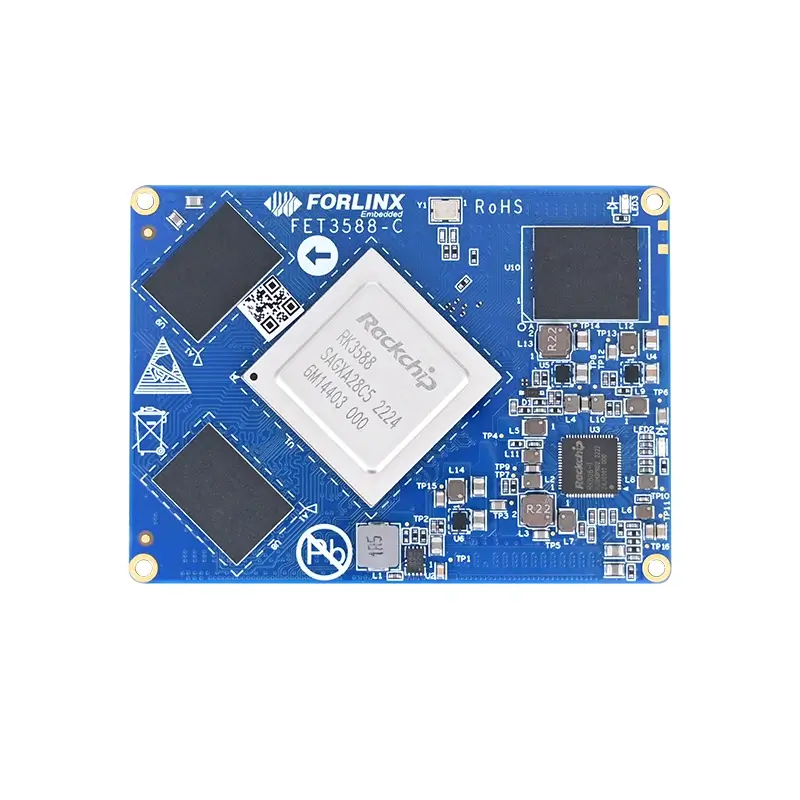
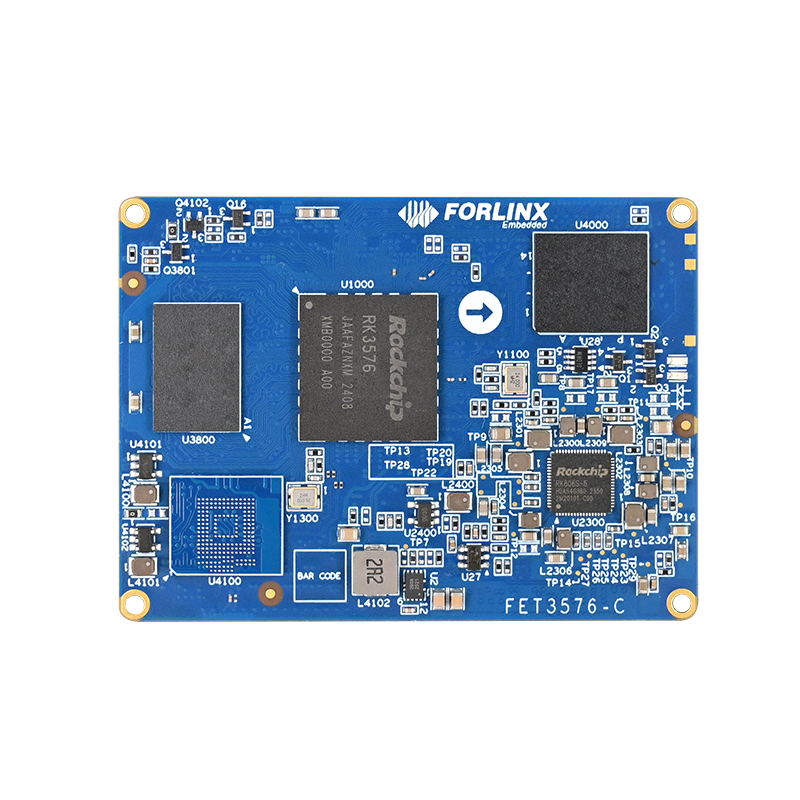
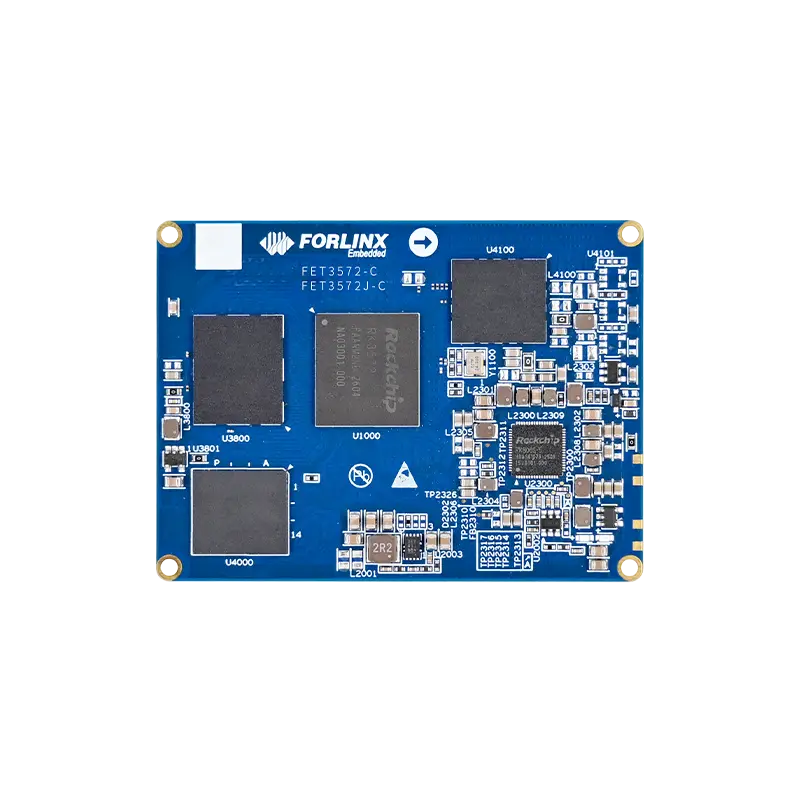
This significant data gap has spurred the rapid emergence of a specialized ecosystem for embodied data collection. Embedded SoC platforms with multi-modal connectivity, low power consumption, and edge-side computing capabilities (such as Rockchip's RK3572/RK3576/ RK3588 series) are becoming critical foundational enablers for all-scenario data collection.
Five Key Development Trends in Embodied Intelligence Data Collection for 2026
Trend 1: Shift from Teleoperated Real Robots to Lightweight Wearable Ego Collection Devices, with Miniaturization and Battery-Powered Solutions Becoming Mainstream
In the early stages, the industry relied on expensive teleoperated humanoid robots for data collection, resulting in high costs and limited production capacity. The current industry is transitioning to wearable Ego cameras, lightweight tactile gloves, and portable UMI handheld collection terminals. A single operator can now complete scenario demonstrations, enabling mass crowdsourced data collection in logistics, home environments, and industrial assembly. Terminals must be compact, fanless, low-power, and offer battery life exceeding 8 hours, placing stringent demands on chip energy efficiency.
Trend 2: Growing Demand for Multi-Modal Synchronized Collection, with Seamless Millisecond-Level Integration of Vision, IMU, Tactile Feedback, and Audio
High-quality embodied datasets require synchronized collection of four types of data: 4K ultra-wide-angle video, six-axis IMU data, 6D tactile feedback, and environmental audio. This demands chips capable of parallel multi-ISP processing, high-speed serial/USB synchronization, and local real-time timestamp alignment to prevent dataset degradation due to multi-source data misalignment. Traditional low-end single-camera processing chips can no longer meet these requirements.
Trend 3: Edge AI Preprocessing, with Hardware Performing Keypoint Extraction, Image Denoising, and Preliminary Labeling Locally
Previously, data cleaning and pose recognition relied entirely on cloud servers, incurring significant transmission bandwidth costs. Next-generation data collection terminals now require local NPUs to execute real-time preprocessing tasks, such as human keypoint detection using YOLO-POSE, object detection, and AI-based image denoising. Only structured features are uploaded instead of raw video, substantially reducing storage and bandwidth costs. Chips with dedicated, high-performance NPUs are becoming a standard requirement.
Trend 4: Cost-Effective Embedded Solutions Become Mainstream, Driven by Global Supply Chains and Cost Efficiency
Traditional dedicated collection hardware, with its high initial investment, limited the scalability of data collection. To overcome this, robotics developers worldwide are rapidly adopting more cost-effective and architecturally open SoC platforms. For example, Rockchip's full range of industrial-grade chips offers comprehensive open-source SDKs, mature multi-camera synchronization solutions, and customizable encryption and security mechanisms (adaptable to data compliance and privacy protection requirements across different global regions). This approach can reduce overall BOM costs by 40%–60% and is becoming the foundational blueprint of choice for major hardware developers globally.
Trend 5: Integrated Hardware-Software Delivery Becomes the Industry Standard, with Chip Platforms Providing Complete Data Pipeline Toolchains
Leading data collection companies are no longer merely selling hardware or datasets. Instead, they deliver comprehensive solutions encompassing ''collection terminals, edge processing platforms, and cloud data governance.'' Chip manufacturers are concurrently providing ISP tuning tools, NPU model conversion software, and multi-sensor synchronization software stacks, reducing terminal product development cycles by over 50%.
RK3572 / RK3576 / RK3588
Core Specifications and Suitability for Data Acquisition Scenarios
How Forlinx Embedded Empowers Embodied Intelligence?
Forlinx Embedded leverages its full-stack hardware capabilities to deeply empower the end-to-end data acquisition pipeline for embodied intelligence.
ISP Capabilities:
Forlinx Embedded has established its own darkroom laboratory to support ISP camera tuning, adapting to the complex real-world data collection needs of embodied intelligence. It supports a wide range of edge AI applications, including AI-HDR, intelligent picture quality optimization (AI-PQ), super-resolution (AI-SR), intelligent noise reduction, sharpening, contrast adjustment, defogging, distortion correction, and 3DNR. Through hardware and software co-design, it enhances imaging and audiovisual experiences, catering to various AIoT intelligent devices.
GMSL Camera SerDes (Serializer/Deserializer) Tuning:
Forlinx Embedded offers mature GMSL SerDes extension solutions. The team has completed adaptation and joint tuning for multiple GMSL camera links, possessing mature mass-production capabilities. This helps customers rapidly complete debugging, shorten mass-production cycles, and meet the demand for robots to perform long-distance, high-definition, and highly synchronized data acquisition.
Furthermore, backed by 20 years of technical accumulation, Forlinx Embedded can provide robust support for the data acquisition and broader requirements of embodied intelligence.
6. Summary
Embodied intelligence is a core direction for AI's evolution and implementation in the physical world. Although hardware technology is maturing, the significant gap in high-quality real-world data remains a critical bottleneck hindering large-scale industrial adoption. Currently, the data acquisition field is experiencing rapid growth, showing clear technological trends toward lightweight solutions, multi-modal synchronization, edge-side preprocessing, high cost-effectiveness, and full-stack delivery. Relying on cost-effective chip solutions, mature hardware/software development platforms, and edge-side visual tuning capabilities, Forlinx Embedded is committed to addressing the pain points in data acquisition and accelerating the large-scale commercial deployment of the embodied intelligence industry.