
Forlinx Introduces FET3572-C SoM Powered by Rockchip RK3572 Mid-Range HMI Processor with 4 TOPS NPU, DSMC Bus
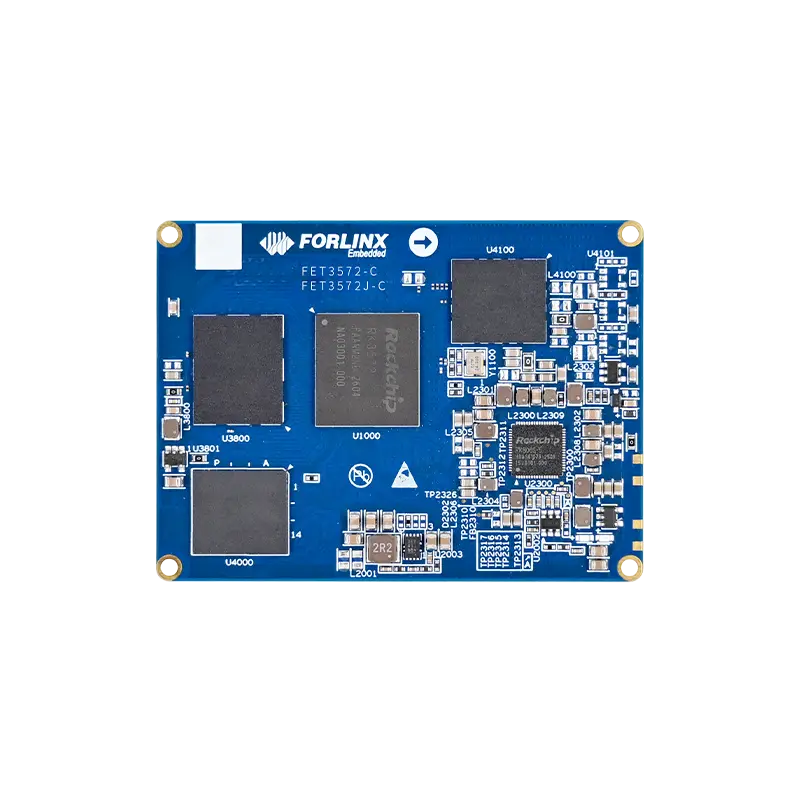
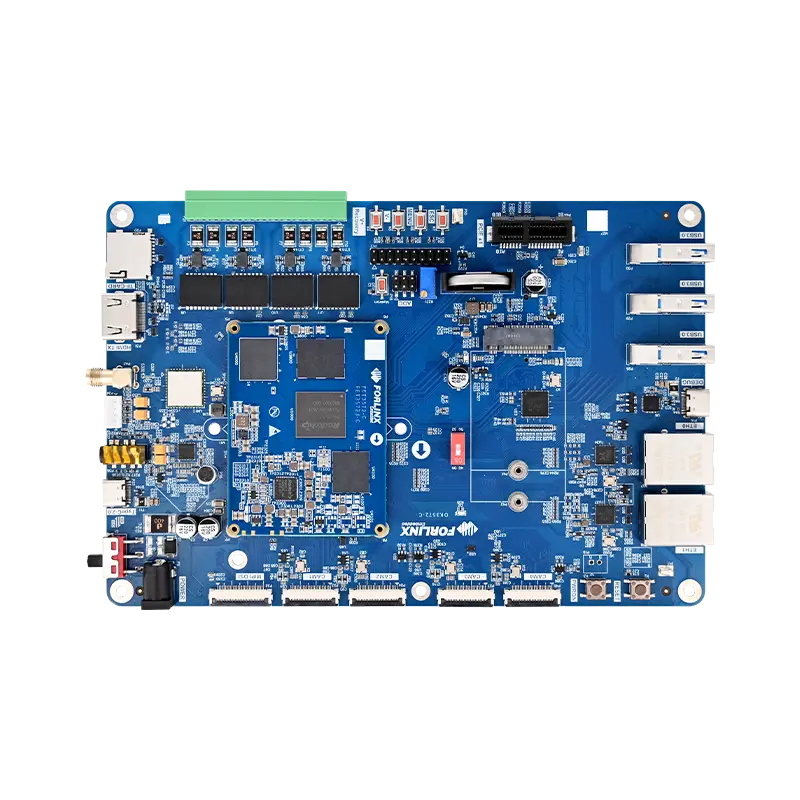
Forlinx Embedded has recently launched the FET3572-C, a System-on-Module (SoM) and an accompanying OK3572-C development board powered by the newly introduced Rockchip RK3572 octa-core processor. Positioned strategically between the entry-level RK3568 and the higher-end RK3576, this mid-range AIoT platform balances a highly optimized heterogeneous architecture with an aggressive selection of industrial-grade interfaces.
While the CPU cores rely on older, cost-efficient microarchitectures, the module shines in edge computing and multi-protocol gateway applications, offering an integrated 4 TOPS NPU, dual Gigabit Ethernet, native RS485 modes, and a unique DSMC parallel bus for FPGA/DSP interconnects.
Forlinx FET3572-C Specifications
Processor & Memory Topography
SoC: Rockchip RK3572 octa-core heterogeneous processor manufactured on an 8nm process
CPU: 2x ARM Cortex-A73 cores up to 2.2 GHz + 6x ARM Cortex-A53 cores up to 2.1 GHz (split into a 4-core cluster and a 2-core cluster for DVFS)
GPU: ARM Mali-G310V2 MC1 supporting OpenGL ES 1.1/2.0/3.2, OpenCL 3.0, and Vulkan 1.4
NPU: In-house Neural Processing Unit delivering 4 TOPS (INT8); supports mixed-precision (INT4, INT8, INT16, FP4, FP8, FP16, BF16) and W4A16 asymmetric MAC acceleration
System Memory: 2GB, 4GB, or 8GB LPDDR5
Storage: 64GB eMMC
Technical Highlight
Downscaled Architecture, Upscaled Efficiency
Instead of packing power-hungry newer-generation performance cores, the choice of dual Cortex-A73 and six Cortex-A53 cores allows the RK3572 to hit highly efficient power targets. Actual measured data highlights a secondary standby power draw of less than 10mW, with idle power consumption hovering around 1.3W under no-load conditions. During standard 1080p video playback, consumption stabilizes at approximately 670mW. This makes the SoM an ideal candidate for fanless sealed industrial enclosures or battery-powered terminals.
DSMC Parallel Bus: Bridging the ARM-FPGA Gap
One of the most notable features of the FET3572-C is the inclusion of the DSMC (Dynamic Static Memory Controller) parallel bus. Supporting 8-bit and 16-bit transfer modes with up to 4 chip-selects (CS) and a configurable 16-bit or 32-bit address width, the DSMC bus allows the host ARM processor to communicate with an external FPGA or DSP as if it were mapping native memory. This eliminates the high latency associated with SPI or the complexity/cost of implementing a multi-lane PCIe bridge in high-frequency data acquisition systems.
Extensive Industrial Interconnects
Where general-purpose application processors require external logic or bridge chips, the FET3572-C breaks out native interfaces directly to its four 100-pin board-to-board connectors:
Serial Protocols: Up to 12x UARTs, all of which natively support hardware Auto-Flow-Control (AFC) and RS485 mode, removing the need for software-driven direction control pins.
Fieldbus Connectivity: 4x CAN-FD controllers compliant with standard and extended frame transmission, backed by an 8192-word receive FIFO.
High-Speed SerDes: 3x Combo SerDes lanes configurable for PCIe 2.1, SATA 3.1, or USB 3.0 DRD.
Multimedia and Displays
The VPU supports 8K @ 30fps decoding (H.265, VP9, AV1, AVS2) and 4K encoding. It pairs with a 12MP ISP supporting up to five camera inputs (via split MIPI CSI-2 lanes). Display engines support independent dual-screen output (up to 4K@60Hz + 2K@60Hz) over HDMI 2.1, eDP 1.3, and MIPI DSI. Notably, it includes an integrated EBC (Electronic Paper Display) hardware controller supporting up to 1872×1404 resolution, expanding its use case into industrial smart signage and E-ink dashboards.
Software and Longevity Support
On the software side, Forlinx provides board support packages (BSPs) based on modern upstream stacks, including Linux 6.12 LTS, Forlinx Desktop 24.04 (Ubuntu-based), Android 16, and Debian 13. AI developers can leverage the Rockchip RKNN toolchain, which converts models directly from mainstream frameworks including PyTorch, TensorFlow, ONNX, and TFLite.
To mitigate layout migration risks, the FET3572-C is designed to be pin-compatible with the FET3576-C SoM. This allows hardware architects to scale designs up or down based on customer performance requirements without spinning a new carrier board. The SoM is available in a standard commercial grade (0°C to +80°C) and a rugged Industrial Grade (FET3572J-C, -40°C to +85°C) with a guaranteed product longevity of 10 to 15 years.
Forlinx Embedded has opened pre-orders for both the FET3572-C SoM and the full OK3572-C evaluation kit. Pricing metrics haven't been published openly but can be requested directly via the Forlinx Sales Engineers.
Related Video and Deep Dive
Meet the Forlinx FET3572-C: 8nm AIoT Platform with 4 TOPS NPU
This video provides a practical breakdown of the FET3572-C module's hardware topography, actual 8nm thermal/power efficiency under load, and its role as a mid-range bridge in the 2026 industrial hardware ecosystem.