
Embodied AI at Scale: Addressing the Challenges of Collecting Physical Interaction Data
In recent years, technological advancements and industrial investment in the field of embodied intelligence have been accelerating steadily. Nevertheless, the transition from laboratory prototypes to large-scale industrial application consistently faces a fundamental engineering challenge: obtaining high-quality, diverse physical interaction data.
We can enable AI to understand multimodal images, text, and complex dialogues, yet in physical interaction scenarios, challenges such as having a robotic arm stably grasp fragile objects or perform long-term operations in unstructured environments remain formidable. The root cause is that physical interaction models must understand real-world dynamics—contact forces, friction, and inertia. These physical priors cannot be learned solely through virtual simulation; they require training on vast amounts of high-precision, real-world physical interaction data.
Currently, the core industrial challenge is the gap between data production capacity and the demands of scale. The competitive edge of a physical AI system largely hinges on the ability to establish a low-cost, high-throughput data collection pipeline. To address this conundrum, the industry has embarked on in-depth exploration of technical pathways for data collection.
Four Traditional Data Collection Solutions
Teleoperation
Human operators wear teleoperation gloves for direct, hands-on teaching to collect real machine operation data. This method yields the highest quality data, but at a significant cost: single-device investment exceeds 200,000 RMB, with data collection costs reaching thousands of RMB per hour.
Motion Capture
Various sensors and exoskeletons are used to capture the actual movements of human operators. This approach offers relatively good quality at a cost slightly lower than teleoperation. However, a significant adaptation gap exists between human motion data and the physical configuration of robots, necessitating extensive post-processing work for kinematic mapping and alignment.
Data Simulation
Training data is generated from scratch within virtual 3D simulation environments, offering a low-cost solution. Its fatal flaw is the sim-to-real distribution shift—real-world complexities like friction, material deformation, and fluid dynamics are difficult to replicate. Models trained solely in simulation often struggle and fail when deployed in real-world scenarios.
Internet Videos
Massive amounts of human action videos or image materials are sourced from the internet, providing ample data volume. However, most of this data consists of unlabeled 2D videos, is of single modality, and suffers from poor quality, making it unsuitable for direct use in training robots for physical interaction.
These four traditional methods involve significant trade-offs and fail to simultaneously meet the three core demands: low cost, large scale, and high quality. The industry urgently needs new solutions, leading to the emergence of novel technical approaches.
UMI & Ego: Pioneering a New Wave in Data Collection
UMI: A Balanced Solution for Low-Cost Robotic Arm Data Collection
Confronting the high cost of teleoperation and the low fidelity of simulation, Stanford University, Columbia University, and the Toyota Research Institute jointly introduced the UMI (Universal Manipulation Interface) collection scheme, reducing overall hardware costs to the range of tens of thousands of RMB. By using a handheld gripper device to synchronously record human operation intent and motion trajectories, it significantly lowers the barrier to obtaining high-quality imitation learning data. Its limitation lies in its focus on end-effector manipulation, lacking comprehensive whole-body motion capture capabilities, which restricts its effectiveness in complex whole-body interaction scenarios.
Ego: First-Person Data Collection Ignites Industry Transformation
If UMI addresses ''where to get end-effector operation data,'' then Ego opens up a broader horizon. In February 2026, NVIDIA’s EgoScale combined hundreds of thousands of hours of first-person video with motion retargeting. By using head-mounted RGB devices to record entire interaction processes and converting them into executable robot trajectories, it eliminated the need for expensive master-slave hardware, achieving a 10x efficiency improvement and an 80% cost reduction.
While UMI and Ego each have their strengths, neither can independently cover all requirements. An industry consensus is forming: Ego will not replace other methods.The optimal solution is a pyramid structure of Ego + UMI + Multimodal Fusion—where the Ego layer handles environment perception, the UMI layer produces standardized data at scale, and the multimodal layer tackles fine-grained interactions, ultimately achieving a balance among cost, scale, and precision.
This pyramid-style, systematic collection places extremely high demands on the underlying hardware platform: it requires both flexible integration of various hardware components and seamless software-hardware coordination throughout the entire pipeline. This is precisely where Forlinx Embedded’s ODM (Original Design Manufacturer) solution excels.
Complete ODM Solution for Embodied AI Multimodal Data Collection
Addressing the technical challenges of first-person, embodiment-free data collection for embodied AI, Forlinx Embedded provides a comprehensive ODM base solution. It enables a complete pipeline from head-mounted control units and wrist nodes for ''Collection · Synchronization · Encoding · On-device Algorithms · VLM-based Quality Inspection,'' helping clients rapidly generate high-quality training datasets. The entire solution is built around seven core capabilities:
Diverse Hardware Platforms to Meet Multi-Scenario Demands
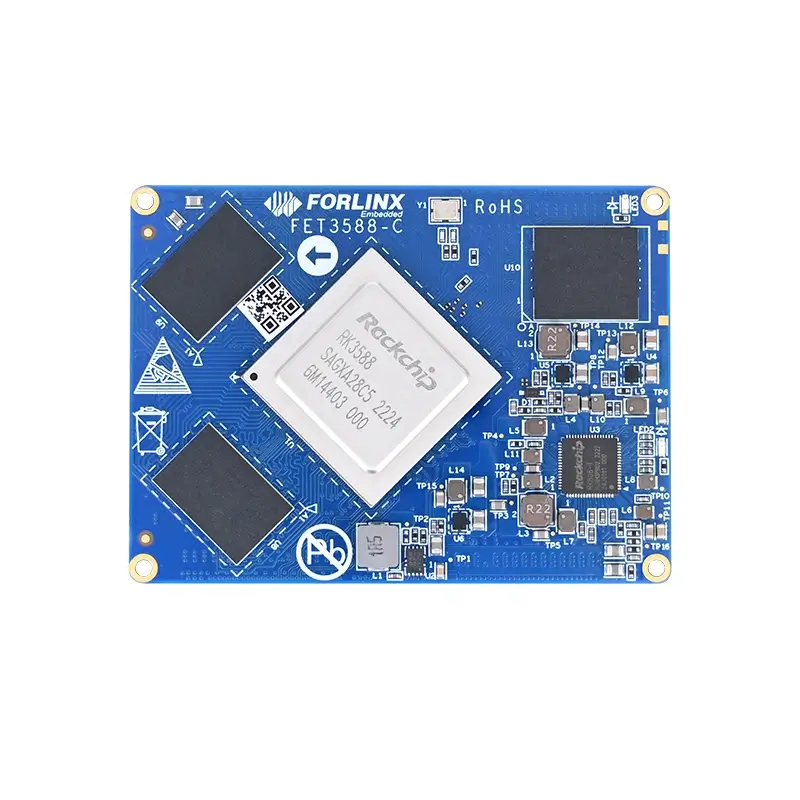
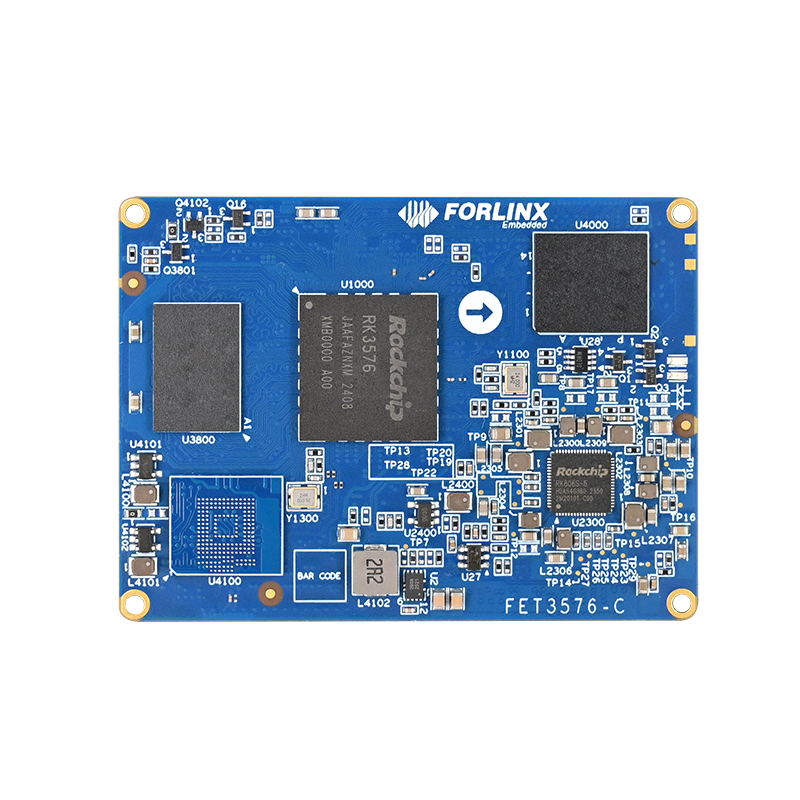
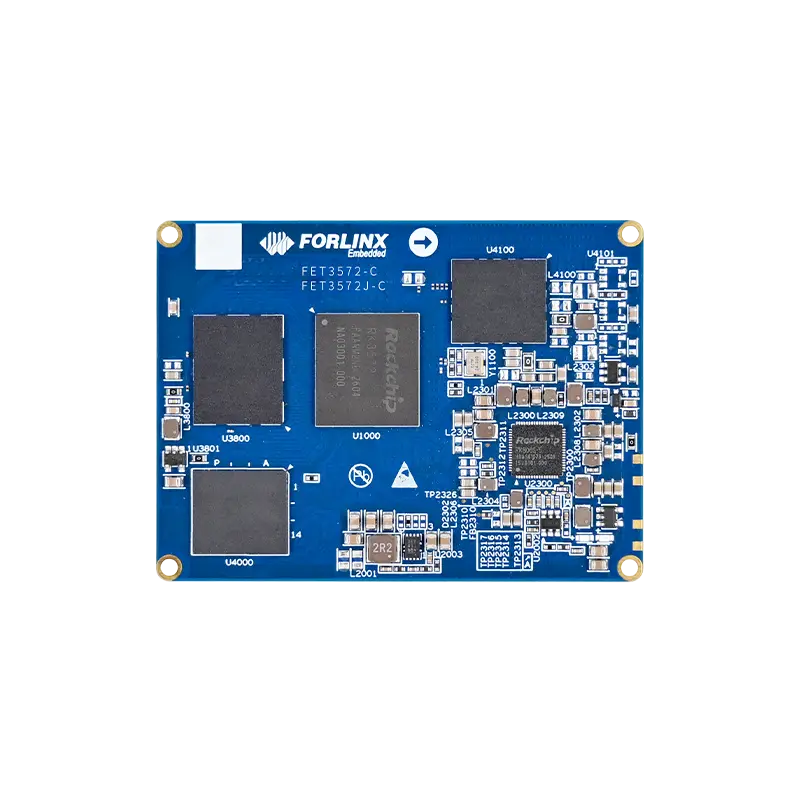
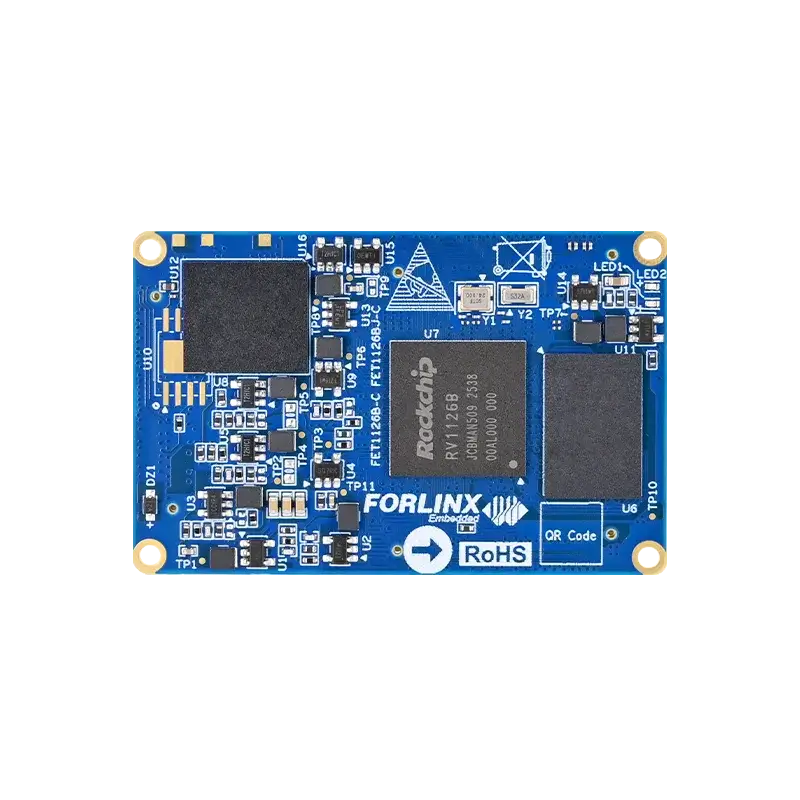
A modular combination of head-end controllers and wrist nodes flexibly covers scenarios like Ego devices, UMI wearables, and robot bodies. We offer SoM options such as (list models here) for flexible selection based on computing power and power consumption requirements.
| Parameter | FET1126B-C SoM | FET3572-C SoM | FET3576-C SoM | FET3588-C SoM |
| Processor | RK1126B | RK3572 | RK3576 | RK3588 |
|
Manufacturing Process |
14nm | 8nm | 8nm | 8nm |
| CPU Architecture | [email protected] | 2×[email protected] + 6×[email protected] | 4×[email protected] + 4×[email protected] | 4×[email protected] + 4×[email protected] |
| NPU Computing Power | 3TOPS INT8 | 4TOPS INT8 | 6TOPS INT8 | 6TOPS INT8 |
| ISP Capabilities: | 12MP | 12MP | 16MP | 48MP |
| Power Consumption: | Typical power: 0.505W, sleep power as low as 0.007W. | Typical power: 1.3W, ultra-low power suitable for battery-powered devices with low cooling demands. | Typical power: 1.8W, balanced performance and power consumption. | Power: 3-5W, higher heat dissipation, suitable for plugged-in or large-capacity lithium battery devices. |
| Video encoding | H.264, H.265,4K@30fps | H.264, H.265,4K@60fps | H.264, H.265,4K@60fps | H.265/HEVC, H.264/AVC,8K@30fps |
| MIPI CSI | Max 4 lanes (2-lane MIPI), 2.5Gbps/lane. Supports two MIPI CSI/LVDS/SubLVDS D-PHY ports, each D-PHY v1.2 compliant (4-lane, 2.5Gbps/lane). | Max 4 lanes: 2 MIPI C-PHY / 4x2-lane MIPI CSI D-PHY. | Max 5 lanes: 2 MIPI C-PHY / 4x2-lane MIPI CSI D-PHY + 1 MIPI C-PHY. | Max 6 lanes: 2 MIPI C-PHY / 4x2-lane MIPI CSI D-PHY OR 2 MIPI C-PHY + 2x4-lane MIPI CSI D-PHY. |
| Core Positioning | Lightweight EGO/UMI Wristband Acquisition Terminal | Lightweight Wearable Ego Acquisition Terminal | Mid-Range Wearable Ego Acquisition Terminal | High-End Wearable Ego Acquisition Terminal |
Comprehensive Camera Compatibility
For high-frequency motion scenarios in embodied first-person data capture, Forlinx Embedded supports adaptation of mainstream global shutter cameras from the market. This effectively mitigates the ''jelly effect'' caused by rolling shutter in fast motion, achieving distortion-free and highly synchronized images to maximally restore real scenes, ensuring the quality and accuracy of training data. Simultaneously, we provide multiple mature and stable MIPI-GMSL SerDes conversion solutions, meeting the access and deployment needs of cameras across various scenarios and specifications, with strong hardware compatibility and high stability.
Professional ISP Tuning Capabilities
With our self-built optical darkroom, we conduct specialized ISP camera tuning to meet the complex real-world capture needs of embodied intelligence. Supports a rich suite of edge-side AI imaging algorithms including AI-HDR, AI Picture Quality optimization (AI-PQ), Super Resolution (AI-SR), Intelligent Noise Reduction, Sharpening, Contrast Adjustment, Dehazing, Distortion Correction, and 3DNR. Leveraging hardware-software co-design solutions, we enhance imaging and audiovisual effects for various AIoT smart device scenarios.
End-to-End No-Body Capture Pipeline Capability
Relying on a multi-dimensional clock synchronization mechanism (PTP, NTP, Wi-Fi TSF, Sub-1G) between head controllers and wrist nodes, a unified global time reference is established for synchronous multi-device sampling. The system can integrate image frames, IMU, and various sensor data in real-time and cache them. Using camera frame time as the unified standard, it synchronizes and organizes IMU data and timestamp information, generates standardized data packets, encapsulates them as SEI (Supplemental Enhancement Information), and finally outputs the stream via H.265/H.264 video codecs, achieving stable storage of all data to disk and building a complete no-body capture pipeline.
High-Precision Data Time Synchronization Capability
For different application scenarios like single-controller or multi-controller setups, we provide two adapted solutions: hardware-triggered synchronization and software timestamp synchronization. At the hardware level, precise synchronization is achieved through PWM-to-FSYNC/FSIN triggering, with latency controllable to tens of microseconds. At the software level, relying on PTP, NTP, Wi-Fi TSF, and Sub-1G protocols, multi-controller timeline alignment is accomplished, with latency stably controlled within hundreds of microseconds, ensuring comprehensive protection for data timing accuracy.
High-Consistency Data Acquisition Capability
Using multi-camera AIQ Group unified control for AE (Auto Exposure) and AWB (Auto White Balance) eliminates brightness and color temperature deviations between different cameras, achieving synchronized exposure convergence across cameras to avoid interference with temporal data from ambient light changes. Furthermore, based on the Linux 6.1 RT real-time kernel and combined with Virtual GPIO technology, system scheduling interference is avoided through CPU core binding and hardware interrupt isolation, compressing data latency to as low as 10 microseconds, significantly enhancing the stability and reliability of VIO data acquisition.
Edge-Side Intelligent Data Cleansing Capability
Supports real-time on-device data filtering and optimization, effectively improving the rate of valid data acquisition. The system can validate in real-time the standardization and SOP (Standard Operating Procedure) compliance of captured actions, immediately discarding invalid or failed samples such as abnormal postures, incomplete operations, occluded views, and blurred images. It automatically generates quality scores and classification tags for each data entry, writing them into SEI, and outputs them in a standardized format to the model-read module, providing high-quality data sources for subsequent model training and data analysis.
Forlinx Embedded is the professional provider of the hardware foundation for this complete ''Data Production System'' – the Embodied Intelligence Multi-Modal Data Acquisition ODM Solution, covering the entire chain from core board selection, camera adaptation, acquisition synchronization, encoding and storage, to edge-side quality inspection. If you are planning your embodied intelligence data acquisition strategy, feel free to contact us to obtain technical reference documents or consult on hardware carrier board customization solutions.