
1-Second Camera Live Feed on Power-Up! How Does the RV1126B Pull Off This Blazing-Fast Boot?
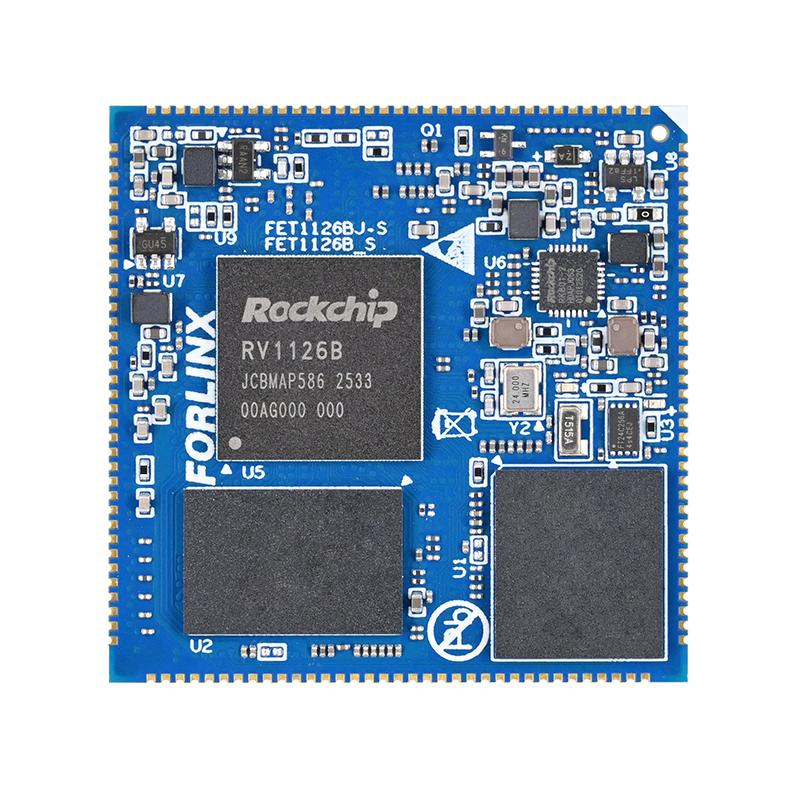
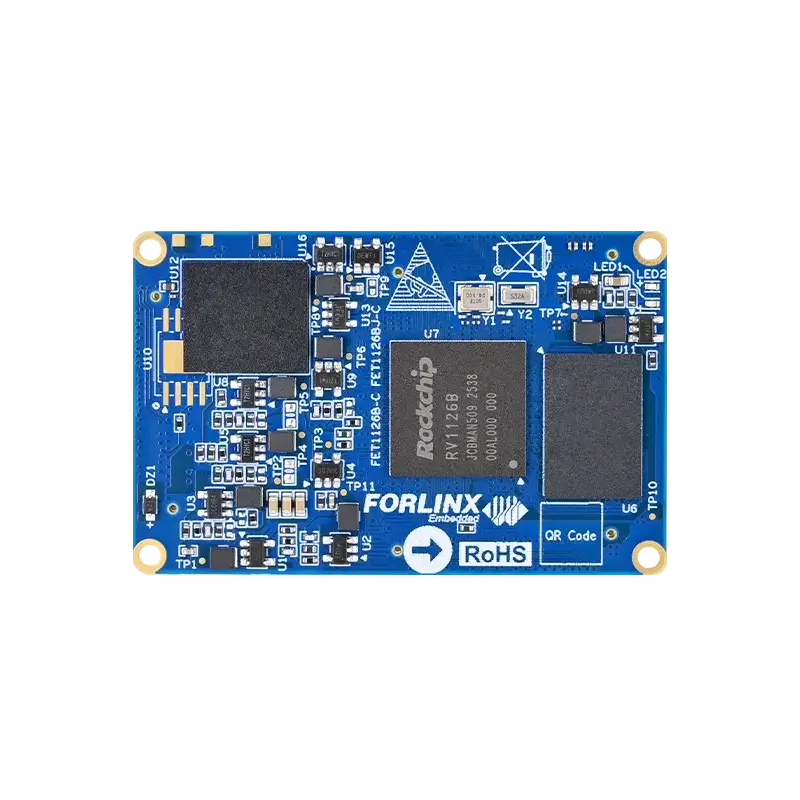
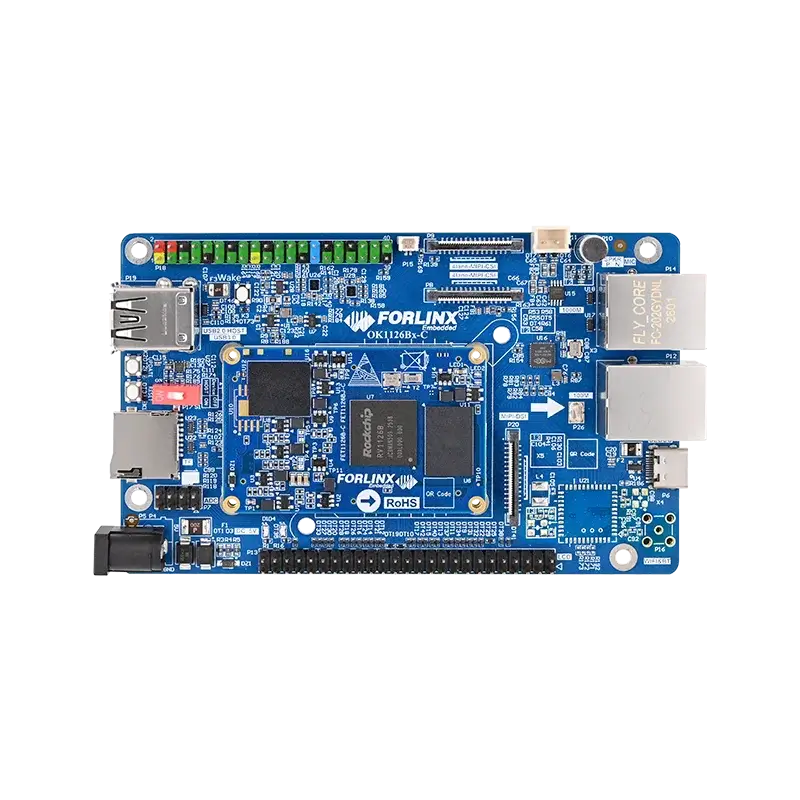
In critical scenarios, a 1-second delay makes you miss the target. Whether for body-worn recorders capturing sudden moments or industrial cameras requiring instant capture, slow camera startup easily costs you key footage. To meet such '' instant power-on imaging'' demands, Forlinx Embedded has enabled fast boot for OS04A10 and OV13855 cameras on OK1126B-C/OK1126B-S platforms: camera live feed outputs to the screen within 1 second of power-up, putting the device immediately in shooting or image-capturing mode.
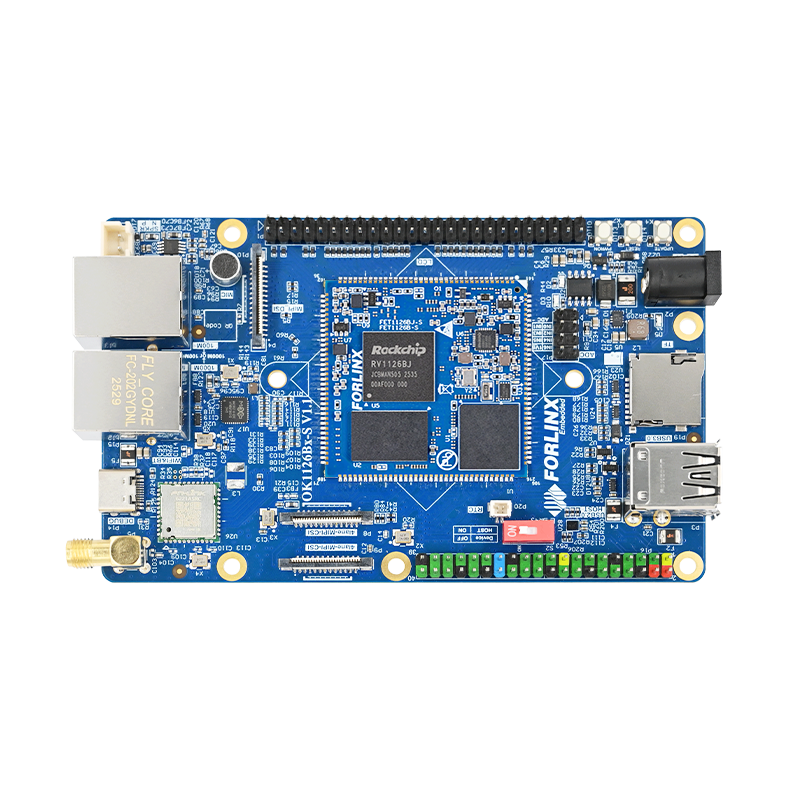
This demo is based on Forlinx Embedded OK1126B-S dev board, paired with an LCD screen and OV13855 camera.
Implementation Principle
The RV1126B integrates a high-performance RISC-V MCU core, with a ported lightweight ISP 2A algorithm (Fast AE/AWB) that assists the ARM core in completing camera and ISP initialization, enabling rapid image effect convergence. Since the Linux kernel takes time to boot after power-on, the MCU runs AE/AWB convergence and day/night mode judgment in parallel during this period. After the kernel's ISP driver registers, the sensor directly uses the exposure value calculated by the MCU to output frames — quickly generating the first valid frame with basically stable image quality.
Basic Fast Boot Workflow:
MCU Phase Design
MCU-assisted fast image convergence process:
It takes some time for the Linux kernel to finish booting after power-on — the MCU runs all related workflows in parallel at this stage.
After power-on, wait for SPL to load the required configuration parameters, and initialize the CIS in parallel. To speed up convergence, the CIS outputs frames at a high frame rate (usually over 60fps) in the MCU phase;
After acquiring configuration parameters, judge ambient brightness via the hard light sensor to set the corresponding day/night mode and initial CIS exposure. If no hard light sensor is available, directly apply the preset initial CIS exposure, and use a soft light sensor for day/night mode judgment;
The lightweight Fast AE/AWB (Auto Exposure, Auto White Balance) algorithm runs on the MCU. The CIS's high frame rate compresses 2A convergence time; after convergence, the MCU passes the 2A results to the kernel as the initial image effect parameters for the kernel's frame output.
ARM Phase Design
To minimize first-frame latency, the kernel and ISP adopt a dedicated optimized workflow in the ARM fast boot phase:
Since user-space apps start late during ARM boot, a dedicated thread is spawned to call vicap interfaces right after the ISP driver registers; pre-allocate buffers for the target output resolution, then perform offline vicap frame capture to cut first-frame latency.
The kernel collects offline RAW frames using the exposure value calculated by Fast AE in the MCU phase.
AIQ (Auto Image Quality module) fetches the MCU's 2A results and day/night mode status, to compute the ISP configuration parameters for the first output frame.
When the camera application (VI) starts, the ISP begins processing the cached offline frames — ISP processing and vicap capture run in parallel at this stage. Once the cached offline frames are fully processed, and ISP processing speed catches up with vicap's capture speed, vicap notifies the ISP to switch from offline to online mode during the vblank (vertical blanking) period at the end of a frame.
Performance Demo
From power-on to rockit_load start (application launch): ~317ms
From power-on to LCD display output (stopwatch-measured): ~919ms
Application Scenarios
Low-power normally-off devices such as battery-powered doorbells and care monitoring cameras;
Products requiring instant snapshot or ''power-on-to-shoot'' capabilities
Summary
For most '' sleep-when-idle, instant-on-when-woken'' products, the first-frame imaging speed directly defines user experience: whether a doorbell can immediately show the visitor the moment it is pressed, or whether a snapshot device can capture every critical moment without missing it. Forlinx Embedded's fast boot solution for OK1126B-C/OK1126B-S leverages the RISC-V MCU core to complete AE/AWB convergence and day/night mode judgment in parallel during the system boot phase. It compresses the total time from power-on to on-screen imaging to ~0.9s, while maintaining solid first-frame image quality — no extra hardware cost required.
Currently, the OS04A10 and OV13855 cameras are fully adapted for the OK1126B-C and OK1126B-S platforms respectively. For custom requirements on other camera models or specific boot latency adjustments, feel free to contact us for further discussion.